
 Bonita Alicia Bart
 Chadia Mathurin
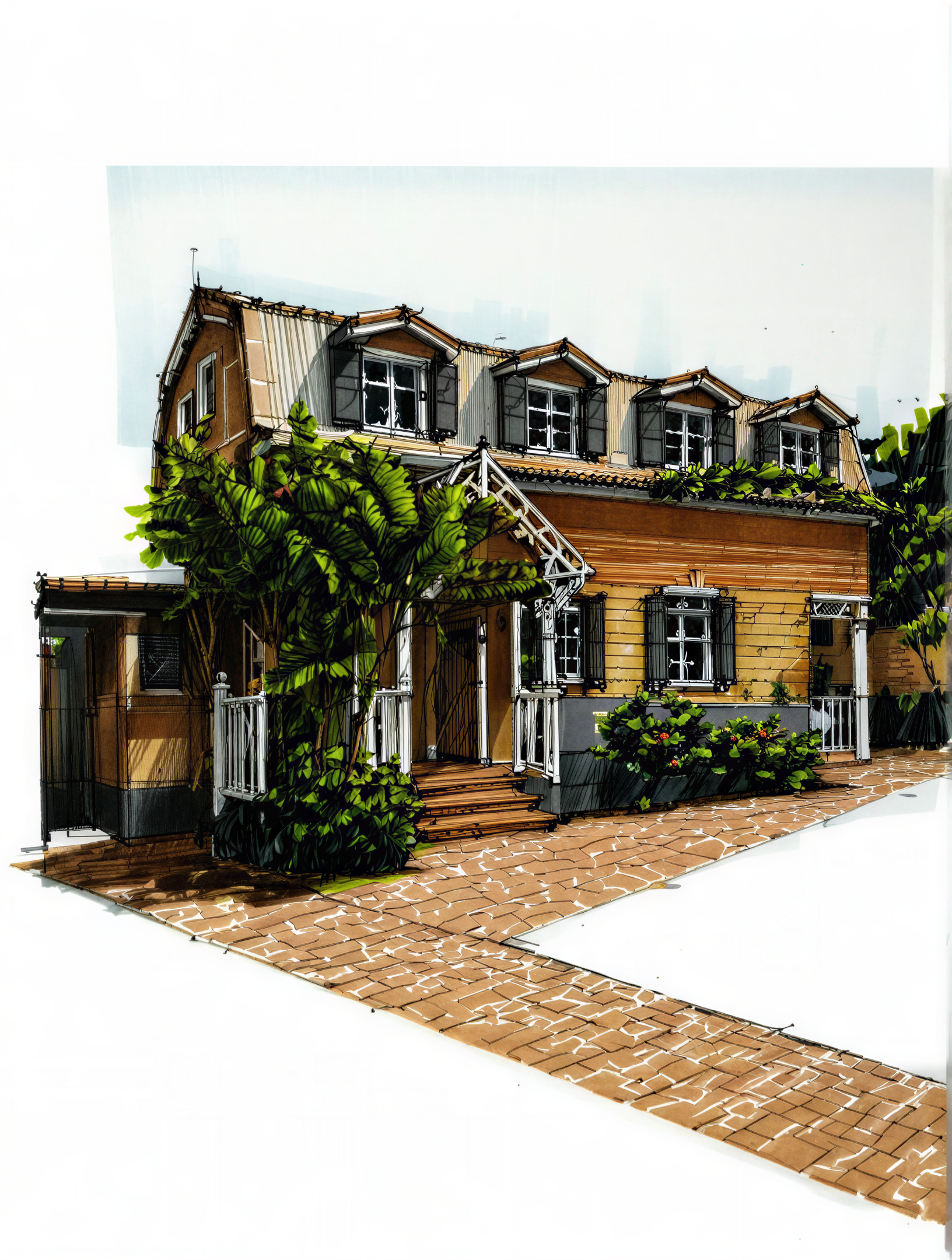
At the corner of Chaussee Road and Grass Street, stands a distinguished timber-framed, two-storey vernacular house with a gambrel roof and dormer windows. Covered in canary yellow paint, its present condition tells a story of weathered facades, patchwork repairs to the lower walls, peeling finishes, and the slow encroachment of material decay. The timber elements bear the marks of age and exposure: faded shutters, uneven surfaces, and visible wear at the base where moisture has left its trace. This is the preserved childhood home of Saint Lucian Nobel Laureate, Derek Walcott — a structure that sits in quiet defiance on an otherwise volatile stretch of street, its cultural weight at odds with its immediate surroundings. A step inside shifts the frame entirely, moving us away from the turbulence of the present street and into the interior world of a boy who would become one of the Caribbean’s most internationally celebrated voices. But Walcott House is more than a preserved historic residence; it stands as a living testament to the layered identity of the Caribbean, shaped by climate, memory, and the ongoing negotiation of place.
The Laureate: Derek Walcott
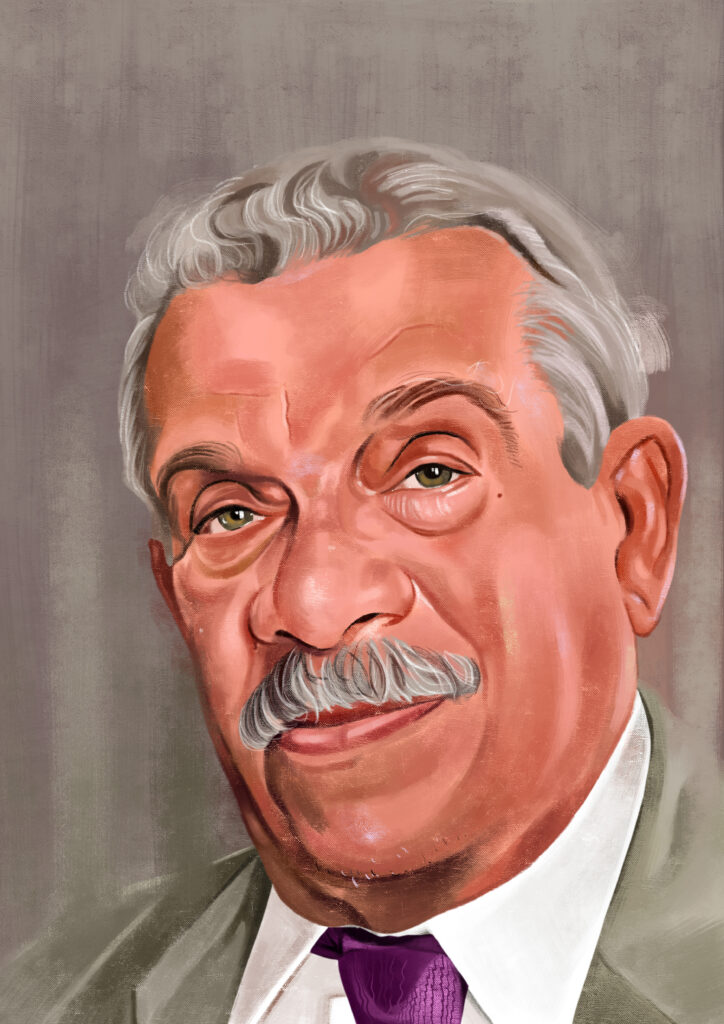
Derek Walcott was born in Castries, Saint Lucia in 1930, educated first at St. Mary’s College and later at the University of the West Indies in Jamaica. His Nobel Prize in Literature, awarded in 1992, recognised not only his literary brilliance but his sustained engagement with the historical vision of the region.
Walcott’s writing is preoccupied with the physical and psychic remnants of colonialism — ruins, memory, the persistent presence of the past – replicating the Caribbean as a place assembled from fragments, where meaning is not inherited intact but painstakingly reconstructed from the detritus of history. It is a sensibility that finds its perfect parallel in the building he grew up in, a structure assembled from fragments: European forms reinterpreted through Caribbean hands, colonial traditions bent to serve a different climate, a different life.
Walcott House’s Architectural Elements
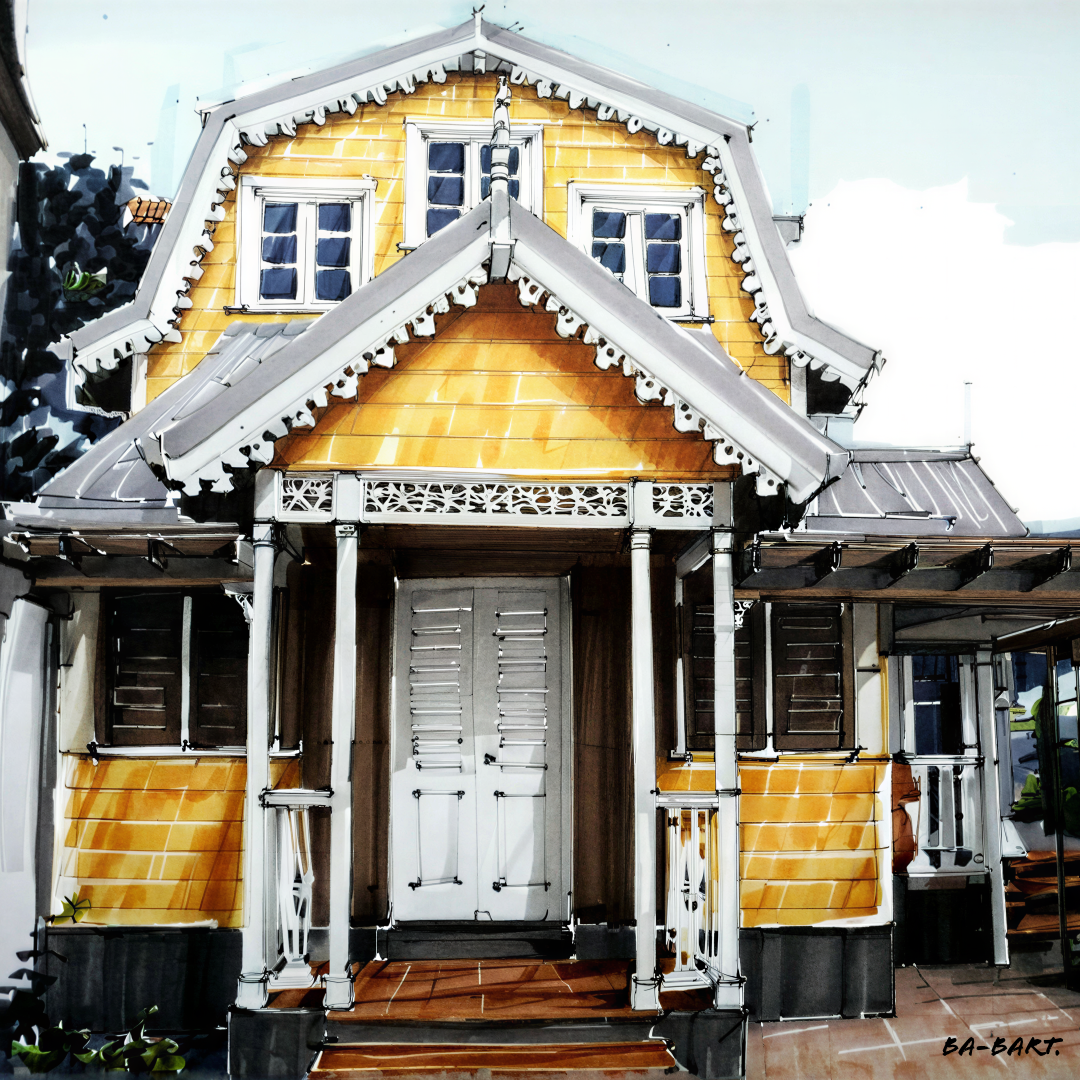
Our house with its bougainvillea trellises, the front porch gone, was a printery. In its noise I was led up the cramped stair to its offices. I saw the small window near which we slept as boys, how close the roof was. The heat of the galvanize. A desk in my mother’s room, not that bed, sunlit, with its rose quilt where we were forbidden to sit.
from Omeros by Derek Walcott
The Walcott House is a clear example of Caribbean vernacular architecture shaped by colonial influence and local adaptation, one in which European formal elements were transformed to respond to the tropical climate, available materials, and the rhythms of social life. Its architectural language reflects a layered history rather than a single stylistic origin, and every element of the building, from its roofline to its balustrade, carries that complexity.
The most dominant feature is the gambrel roof. Originating in the 16th and 17th centuries in Europe and first popularised in Dutch architecture before spreading through colonial American building traditions, the gambrel is a double-sloped form: a steep lower pitch that breaks into a shallower upper pitch. This configuration maximises usable space beneath the roof, allowing for full upper rooms while keeping the building’s overall height compact. In the Caribbean, the form was adapted further still, paired with generous overhangs and lightweight roofing materials to shed the weight of heavy tropical rainfall and exhaust the heat that accumulates beneath a closed roof. The steep lower slope moves rainwater efficiently; the broken profile wastes less material than a single steep pitch. Integrated within it are dormer windows, another European import, which puncture the roof plane to introduce daylight and ventilation into the upper level, relieving the heat that would otherwise build beneath the rafters.
Below the roofline, the building is constructed in a timber-framed system carried here through European colonial practice but quickly embraced across the Caribbean. This is a pragmatic approach not to be confused with colonial loyalty: Timber suited seismic conditions, it was easy to repair and local hardwoods were available. The structure is elevated on a masonry plinth, a distinctly Caribbean environmental adaptation that lifts the timber away from ground moisture, flooding, and pests, extending the building’s life against the specific hostilities of the tropical ground.
Running along the façade is the veranda, which is perhaps the most culturally layered element of all. This element evolved from colonial precedents but was deeply shaped by African spatial traditions and local patterns of daily life. The veranda functions simultaneously as a climatic buffer, a social stage, and a threshold between the private interior and the public street. It shades the interior, promotes cross-ventilation, and creates a semi-public space that is neither fully inside nor outside, essentially a zone of in-between that is. In its own way, a spatial metaphor for the Caribbean condition itself. Timber balustrades define their edges without obstructing airflow, and the whole assembly is articulated with decorative timber fretwork. A unique and popular fretwork, the so-called gingerbread detailing that originated in Victorian Europe and was reinterpreted here as a lighter, perforated ornament that serves ventilation as much as decoration. Louvred timber shutters, influenced by Mediterranean and colonial building traditions, complete the climate system, allowing adjustable airflow and protection from sun and driving rain.
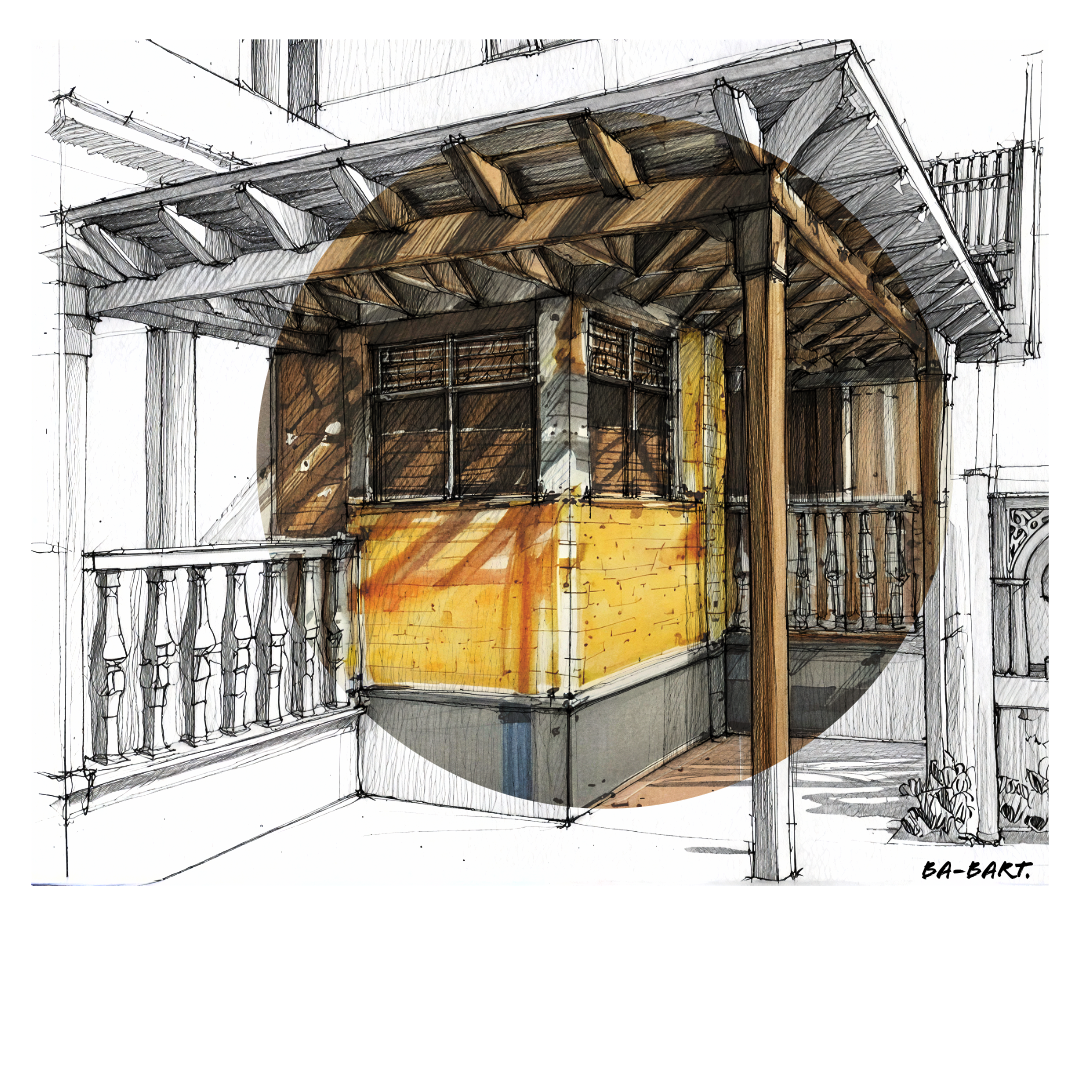
Canopy illustration, The Walcott House. Bonita Alicia Bart
Projecting from the veranda is a deep overhanging canopy, the element that gives the whole façade its characteristic silhouette. Supported by exposed timber posts and beams, its structure is fully articulated: rafters, purlins, and joists left visible rather than concealed, emphasising craftsmanship and a kind of structural honesty that is itself a cultural statement. There is nothing hidden here. The generous projection casts shade across the veranda and the entrance below, shields against driving rain, and allows heat to dissipate upward through the open roof assembly. Beneath it, the veranda is partially enclosed with timber boarding and operable windows fitted with louvres, a balance of ventilation, privacy, and climate control that allows airflow while protecting the interior from sun and driving rain. It is at once the building’s most expressive feature and its hardest-working, as ornament and engineering arrive, characteristically, at the same point.
Despite all these tropical adaptations, the building maintains axial symmetry and proportional balance, its formal order a quiet echo of the European aesthetic values that shaped its original type. The result is a hybrid architectural expression; one ordered and improvisational at once, European in origin, Caribbean in adaptation, where climate, culture, and craft converge to produce a form that is both historically legible and unmistakably local. It is negotiation, not imitation.
Floor Layout1
The current layout of the Walcott house features a small historic museum on the ground and first floors, adapted from a former domestic building. The plans reveal a linear, axial organisation that reflects the building’s original residential typology, later reconfigured for public use.
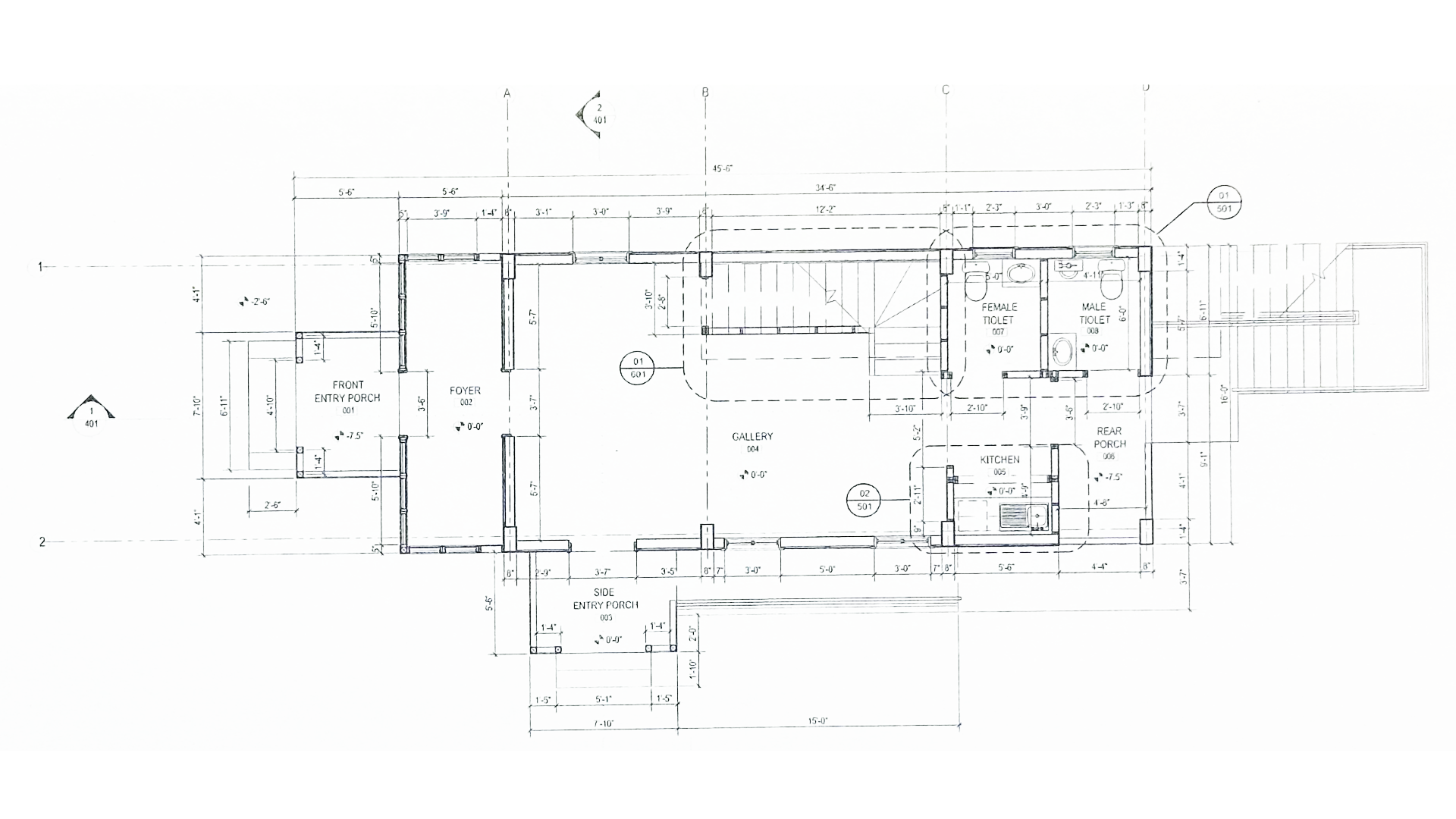
The ground floor plan functions primarily as the public and service level. Entry is through a front porch, which serves as a transitional threshold between the exterior and the interior. From here, visitors move into a central circulation space that organises movement through the building. The layout is largely cellular, with a sequence of rooms arranged along the length of the structure. These rooms are now used as gallery and exhibit spaces, replacing their former domestic functions. Toward the rear and one side of the plan, service spaces such as toilets and a kitchen or support room are clustered together, indicating adaptive reuse rather than a purpose-built museum design. A centrally positioned stair provides vertical circulation, clearly separating public movement from service zones. Secondary porches and exits support ventilation, emergency egress, and staff access.
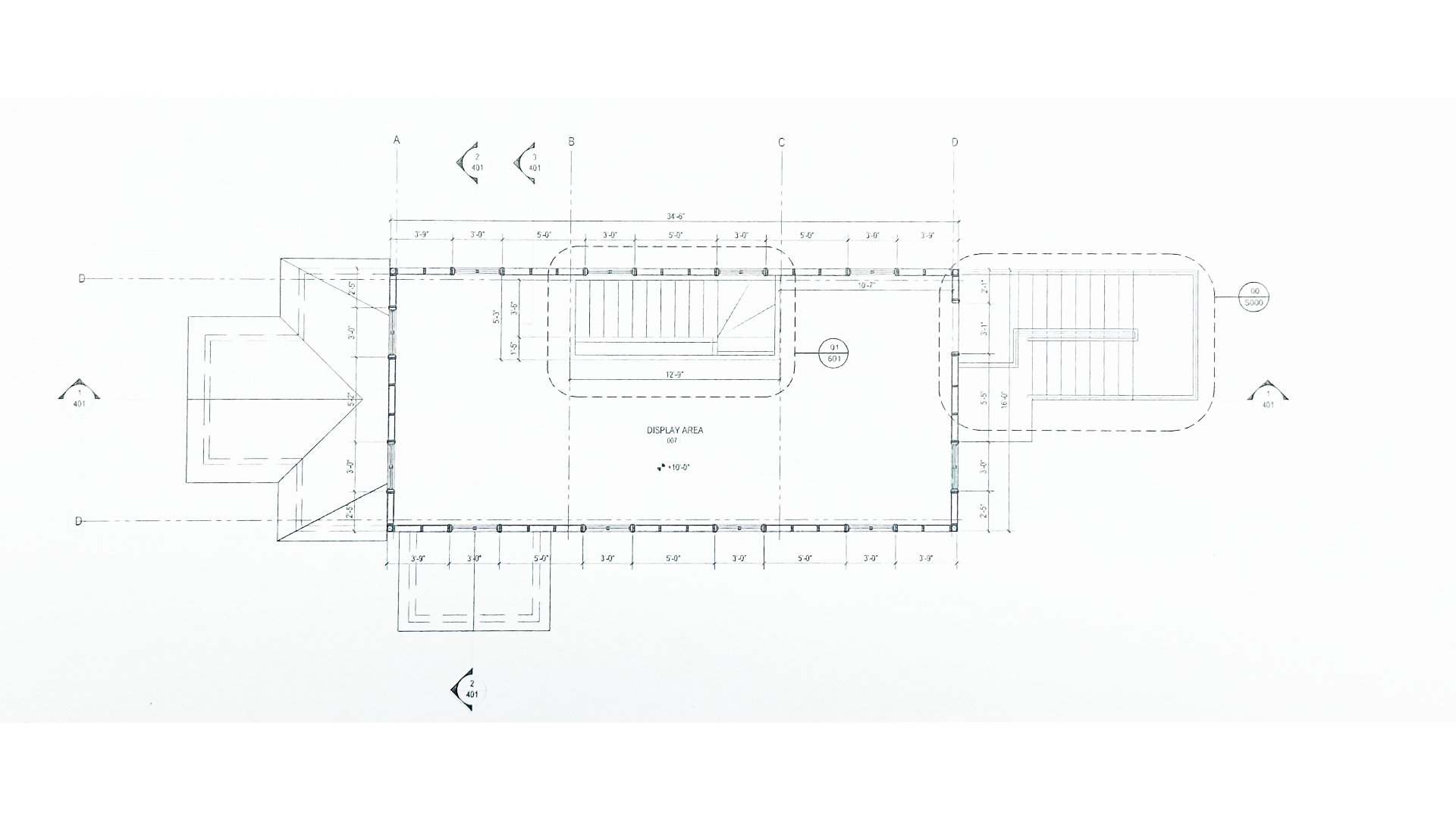
The first floor plan is more open and simplified, reflecting its role as the primary exhibition level. Large, uninterrupted spaces dominate the plan, suitable for display, interpretation panels, and circulation around exhibits. The stairs arrive centrally, reinforcing a clear organisational axis and allowing visitors to orient themselves easily upon arrival. The absence of heavy subdivision suggests that partitions were either removed or minimised to accommodate museum programming. The plan retains the building’s original footprint and structural rhythm, visible in the evenly spaced wall thicknesses and column lines, which subtly guide movement through the space.
Overall, the floor plans demonstrate a sensitive adaptive reuse strategy, preserving a historic timber building while repurposing it as a museum. The spatial arrangement balances public accessibility, exhibition needs, and retained residential proportions, allowing the building’s architectural character to remain legible while supporting its new cultural function.
Identity & Place
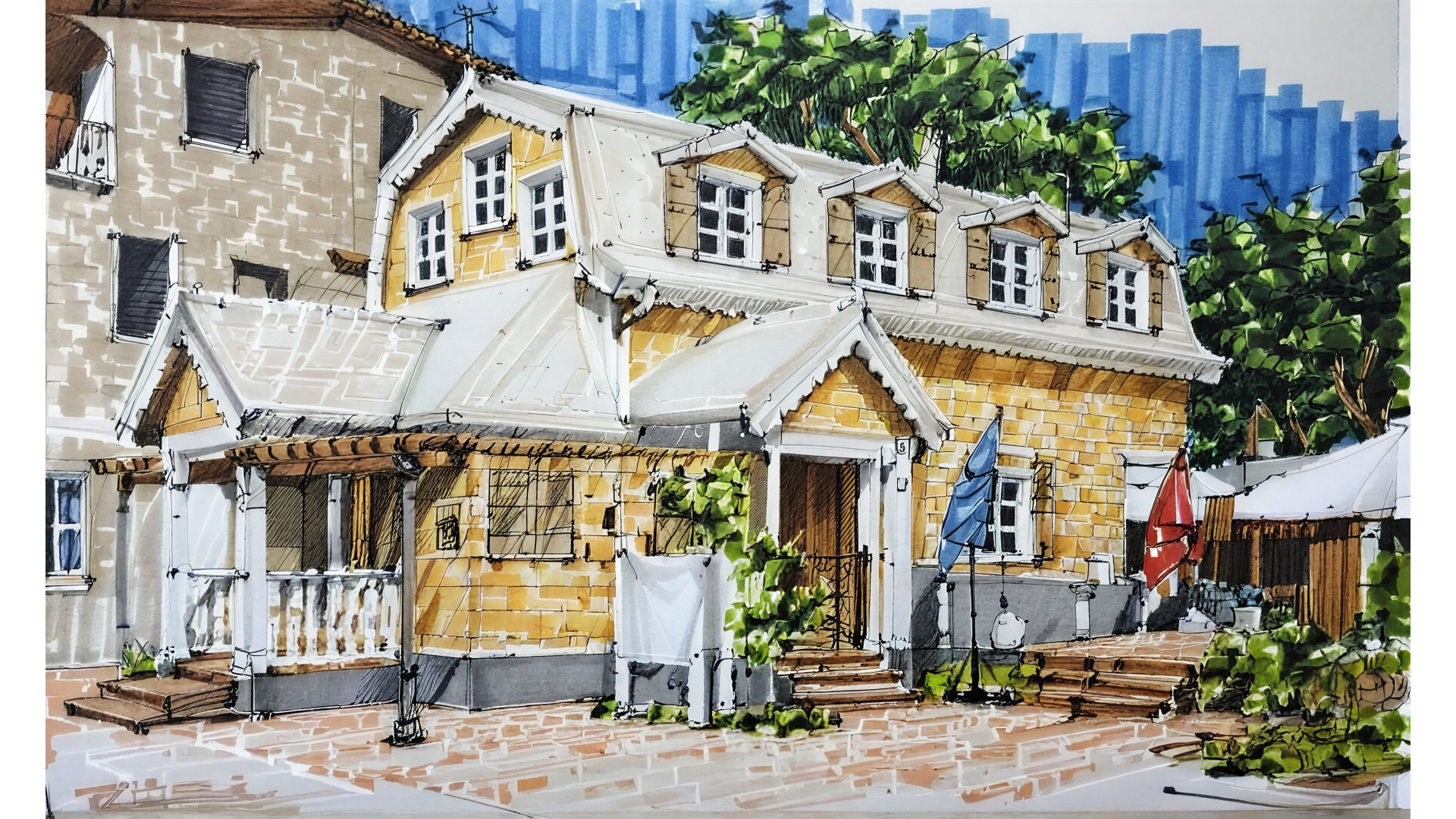
Street Perspective, The Walcott House. Bonita Alicia Bart
Walcott House might easily be read through the lens of colonial mimicry — as though its European forms were absorbed passively, without agency or intention — but it is in fact a deliberate and thoughtful response to environment, culture, and the collective experience of a people. The structure exemplifies cultural architecture in its most comprehensive form; it embodies the layered identity of the Caribbean as hybrid, adaptive, and resilient.
As Walcott’s poetry navigates the space between colonial inheritance and self-definition, the house mediates between imposed architectural traditions and local innovation. The parallel is not incidental. Walcott understood the Caribbean as a place where beauty and burden are inextricably bound — where plantation history, environmental vulnerability, and the ongoing struggle for cultural survival shape everything, including the built world. In this context, architecture becomes a form of silent literature, a material archive of how Caribbean societies have navigated constraint, climate, and historical rupture. Walcott House, in its form and in its survival, is precisely that kind of archive.
Situated in the heart of Castries, the house is woven into the traditional urban fabric that once defined the city; a landscape where timber structures prevailed before the rise of concrete modernity. Its modest scale and careful orientation recall an era when architecture responded intimately to the rhythms of climate and the pulse of street life. That it still stands, canary yellow against a street still negotiating its own redemption, is itself a statement: about persistence, about the refusal to be erased, about the kind of endurance that Walcott spent a lifetime writing into verse.
Walcott House is also, in its own way, still negotiating its own redemption. Its cultural significance is internationally acknowledged but locally under-resourced — a building that holds a Nobel laureate’s memory while its paint peels and its timber weathers, in a neighbourhood that spent years defined by violence and has for years been haltingly reclaiming itself. The house and the street share the same unfinished story: scarred by history, sustained by community, and not yet fully realized. That condition is not incidental to Walcott’s legacy. It is the very reality he wrote about his entire life. The Caribbean, he insisted, was not a place of lack but of becoming. Canary yellow and weathered, the house makes no pretence of arrival. It stands, as it has always stood, in the middle of becoming.
Caribbean vernacular architecture has historically demonstrated environmental intelligence and cultural expression, frequently without formal acknowledgement. Walcott House is a corrective to that silence. It serves as a reminder that the passive ventilation, the deep verandas, the lightweight timber construction were not accidents or approximations. They were solutions, arrived at through generations of lived experience, that anticipated what the modern language of sustainability has only recently learned to name. The building knew what it was doing long before architecture found the words.
Much like Walcott’s poetry, which wrestles with the fragments and contradictions of Caribbean identity, the house stands as a built reflection of those same struggles and triumphs. It shows us that architecture, like verse, can carry the weight of history without being trapped by it; can change and adapt without losing its soul, and can claim a place in the world without closing itself off. The boy who grew up in its rooms became a man who gave the world a new language for the Caribbean. The house, in turn, has become a vessel for everything he left behind. Each is, in its own way, the other’s best argument.


 Kojo Derban
 Chadia Mathurin

